Archives
-
Vol. 2 No. 3 (2025)
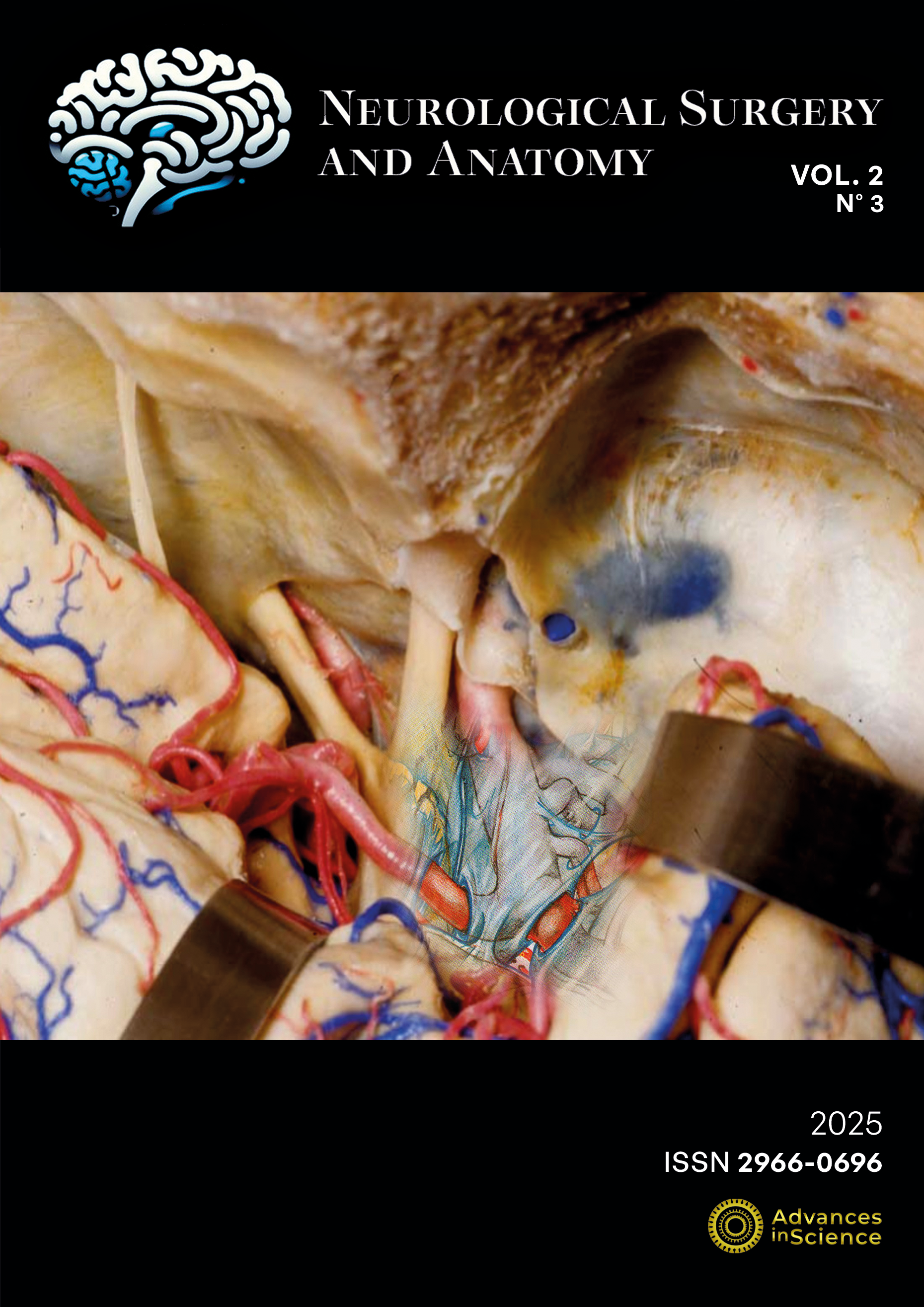
The cover of this issue features a microsurgical dissection of a cadaveric injected specimen, simulating a pterional, transylvian approach to the carotid bifurcation. Superimposed on this image is an artistic rendering of the arachnoidal layers, adapted from a drawing by Mr. Peter Roth, medical illustrator to Prof. Yasargil.
This composition illustrates the original contribution of Vasconcelos Jr. et al., exploring the anatomical limits of the sylvian cistern. The historical context behind this cover is further enriched by the contribution of Cavalcanti de A. Martins, offering readers an additional perspective on this giant of Medical Illustration.
-
Vol. 2 No. 2 (2025)
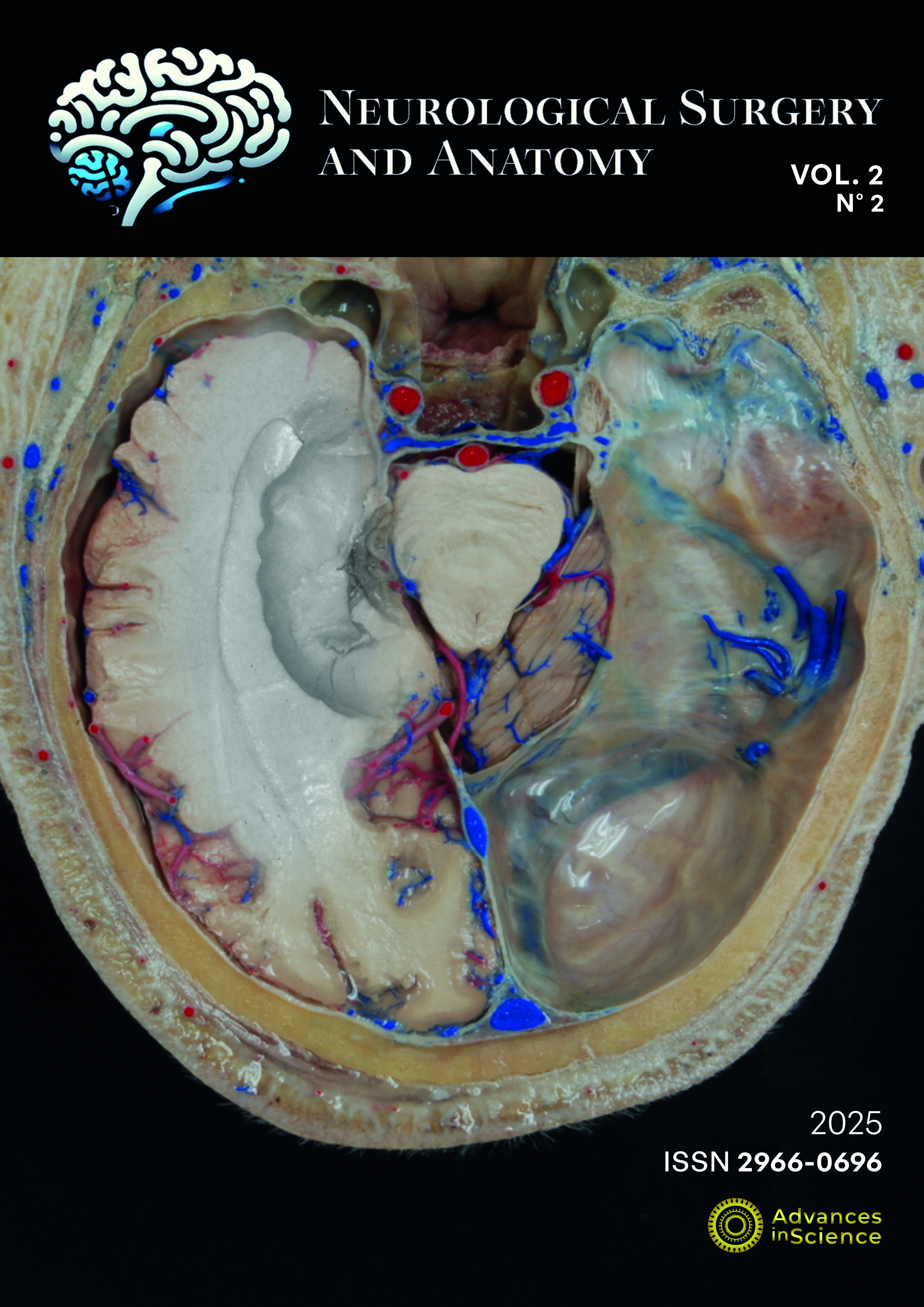
In this issue’s cover of Neurosurgery & Anatomy, the left hippocampus has been embedded within the axial section of an injected cadaveric head, illuminating the often-overlooked spatial relationships between the hippocampal formation and the tentorial incisura. These anatomical connections gain critical relevance in the context of intracranial hypertension and transtentorial uncal herniation. Martins et al., in their contribution to this issue, build on the Rhotonian principle of microneuroanatomy—as “seeing through” superficial structures to grasp their deep topographical relationships, as if “using X-ray vision”—into a dynamic understanding of how pathological anatomy develops and manifests clinically. This departure from studying normal and near-normal anatomy toward a meta-microneuroanatomical perspective invites readers to consider technological advances not as ends in themselves, but as tools for deeper anatomical insight and reasons to touch base with core clinical concepts.
-
Proceedings of the 4th International Rhoton Society Meeting
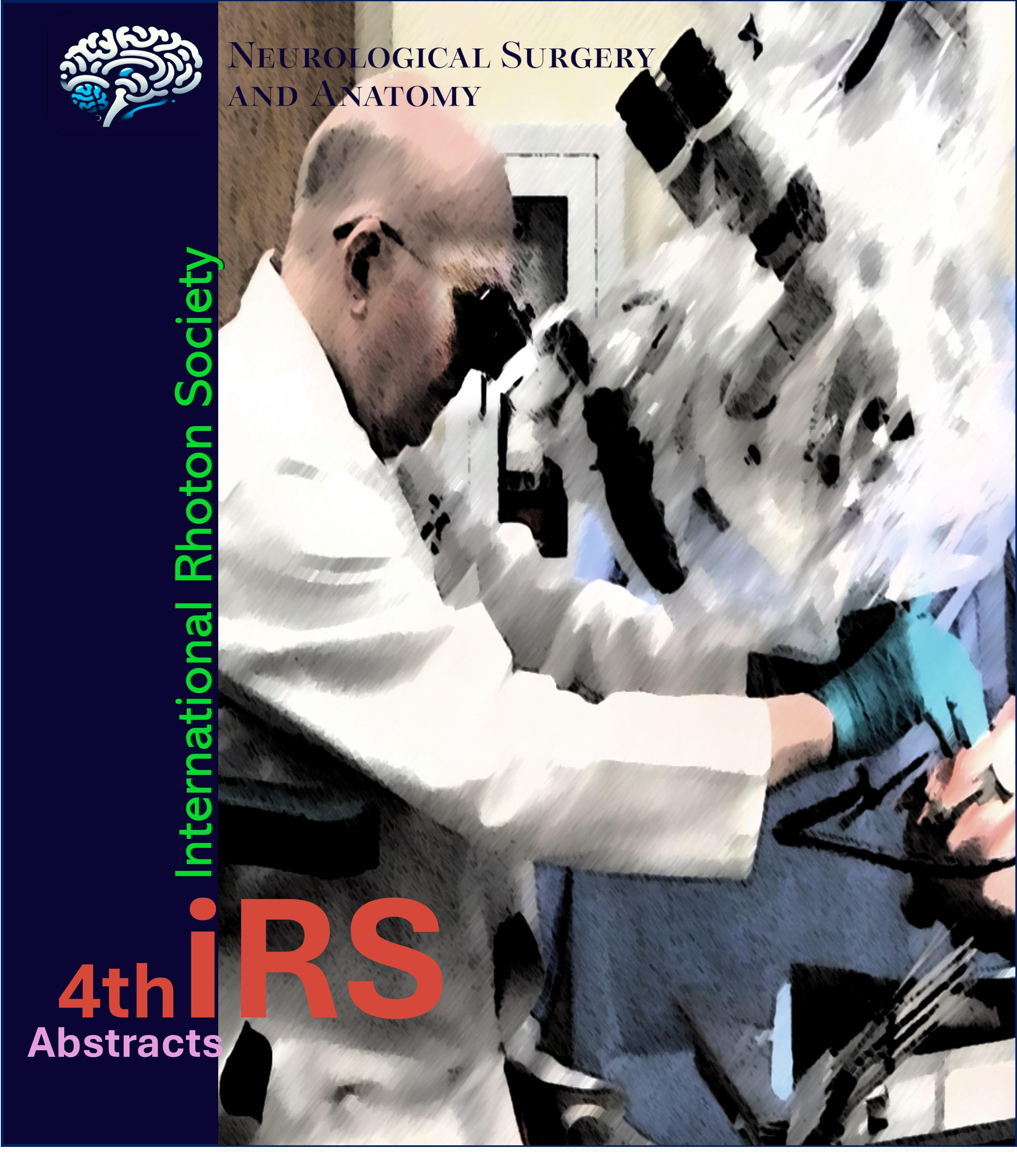
Vol. 1 No. 3 (2024)We extend our gratitude to all those who contributed by submitting their work to be presented at the 4th International Rhoton Society Meeting, held from November 5-7, 2024, in Taiwan. We hope these proceedings serve as a meaningful resource for practitioners and researchers, promoting continued growth and collaboration within the field.